
Open Plan Living Done Well: How to Zone a Space Without Losing Openness
Take down a wall and the whole space opens up. More light, more room, and everything feels connected. The trade-off is that you lose the little cues that tell you where one part of the room ends and the next begins. Cook, eat, work, and relax in one big box, and it can start to feel a bit restless.
The fix is zoning - giving each area its own identity so it works on its own, without building the walls back up. A good open plan room feels like a few cosy rooms that happen to share four walls.
Here's how we do it for clients across the West Midlands, from a Victorian terrace in Moseley to a new build in Solihull. None of it needs building work. Most of it you can do with what you already have, just arranged with a bit more thought.
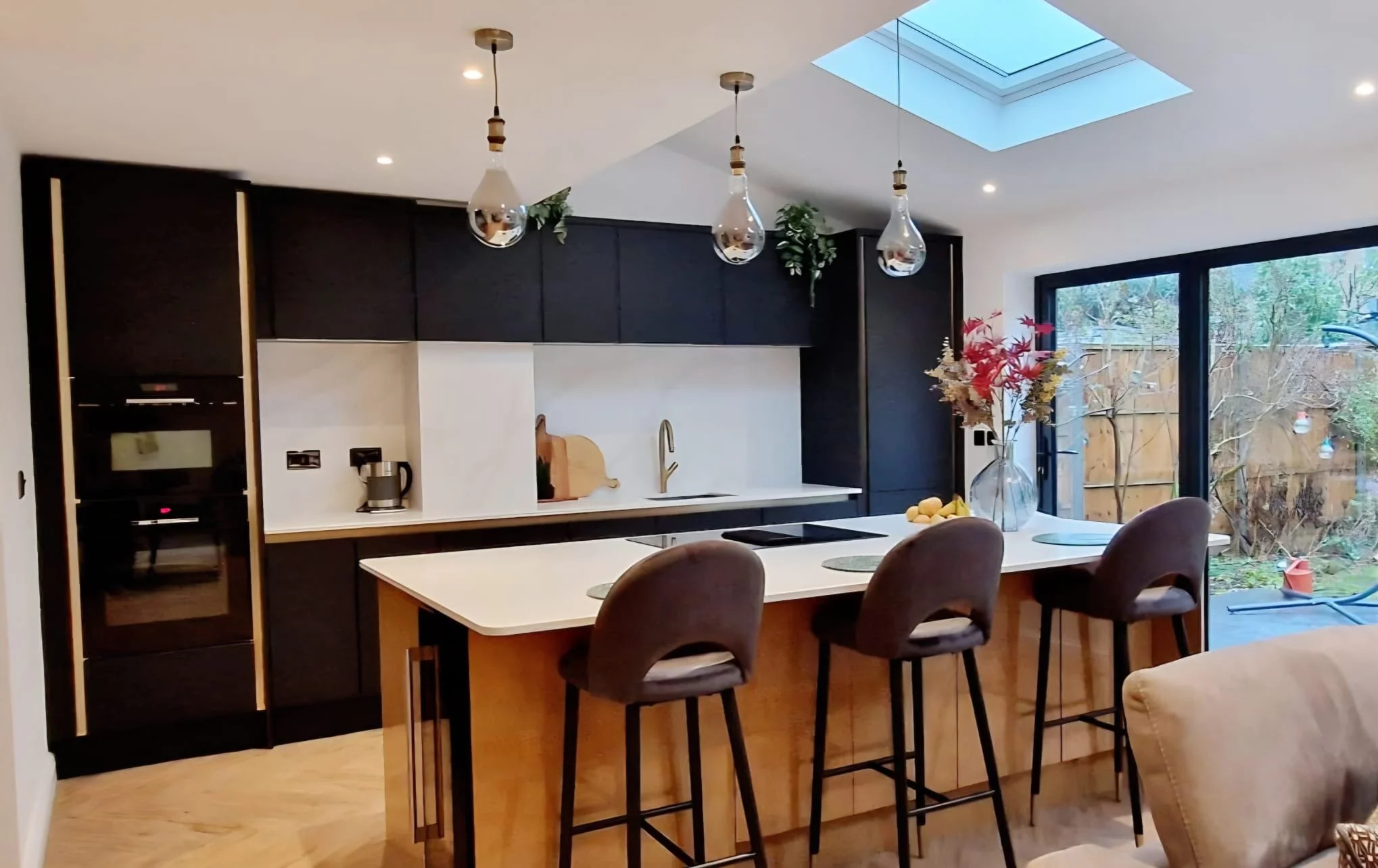
Bright open plan kitchen and living space zoned into separate areas
Start with how you actually live
Before you move a single sofa, think about what the room needs to do. Cooking, eating, working, flopping in front of the telly. Each job needs its own spot with enough room to breathe.
Have a look at where the light lands through the day, and the paths people take from door to door. Those routes are like invisible corridors, so zone around them rather than across them.
It helps to think about how the areas connect, too. You'll probably want the dining table near the kitchen, and the sofa facing away from the washing-up rather than straight at it. Sort that out on paper first and everything else tends to fall into place.
Anchor every zone with a large rug
A rug is the quickest way to mark out an area, and the eye picks it up straight away. Pop one under the sofa and coffee table, another under the dining table, and suddenly you've got two rooms on the same floor.
Just go big. The rug wants to sit under the front legs of the furniture at the very least, and ideally under all of it. Too small and it floats there like a stamp on the floor, doing none of the work you hoped for.
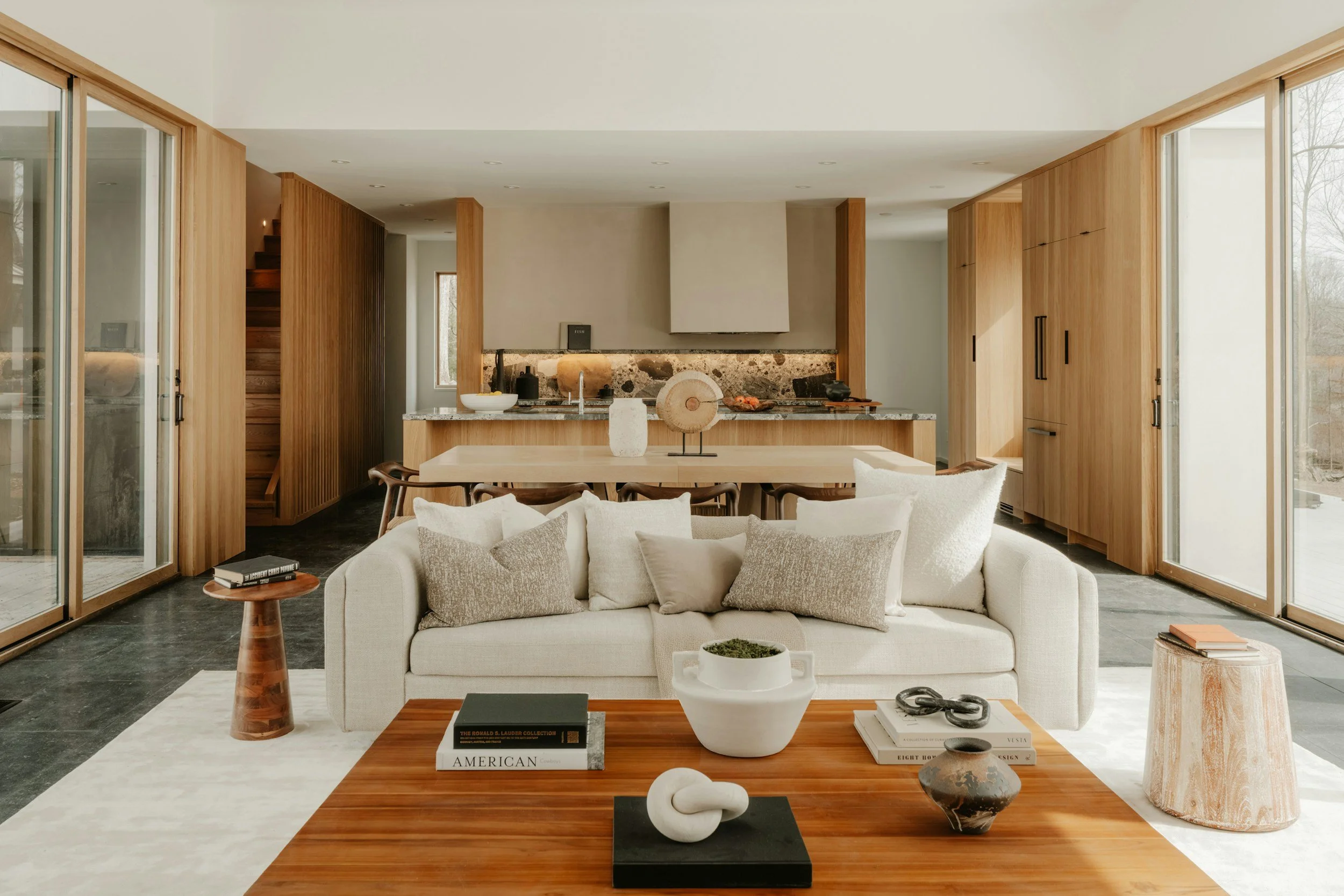
Living area anchored with a large rug and a sofa floated off the wall
Use furniture as boundaries
Where you place furniture does most of the work. Turn the sofa so its back is to the kitchen and you've drawn a clear line between cooking and relaxing. Add a console table behind it and you firm up that edge, with a handy spot for lamps on top. Open shelving makes a lovely see-through divider, splitting the space while light and views carry on through.
Already got a kitchen island or peninsula? You're halfway there. It marks the edge of the cooking zone, gives everyone somewhere to perch, and keeps whoever's cooking in on the chat. Hang a couple of pendants over it and you draw that line up into the air as well.
Use lighting to mark territory
One big ceiling light flattens the whole room. Layer it instead. A low pendant over the dining table, a floor lamp by your favourite chair, some LED strips under the kitchen cabinets. Put each area on its own switch or dimmer and you can light the table for dinner while everything else softens into the background. Lighting carves up a room just as well as a wall does.
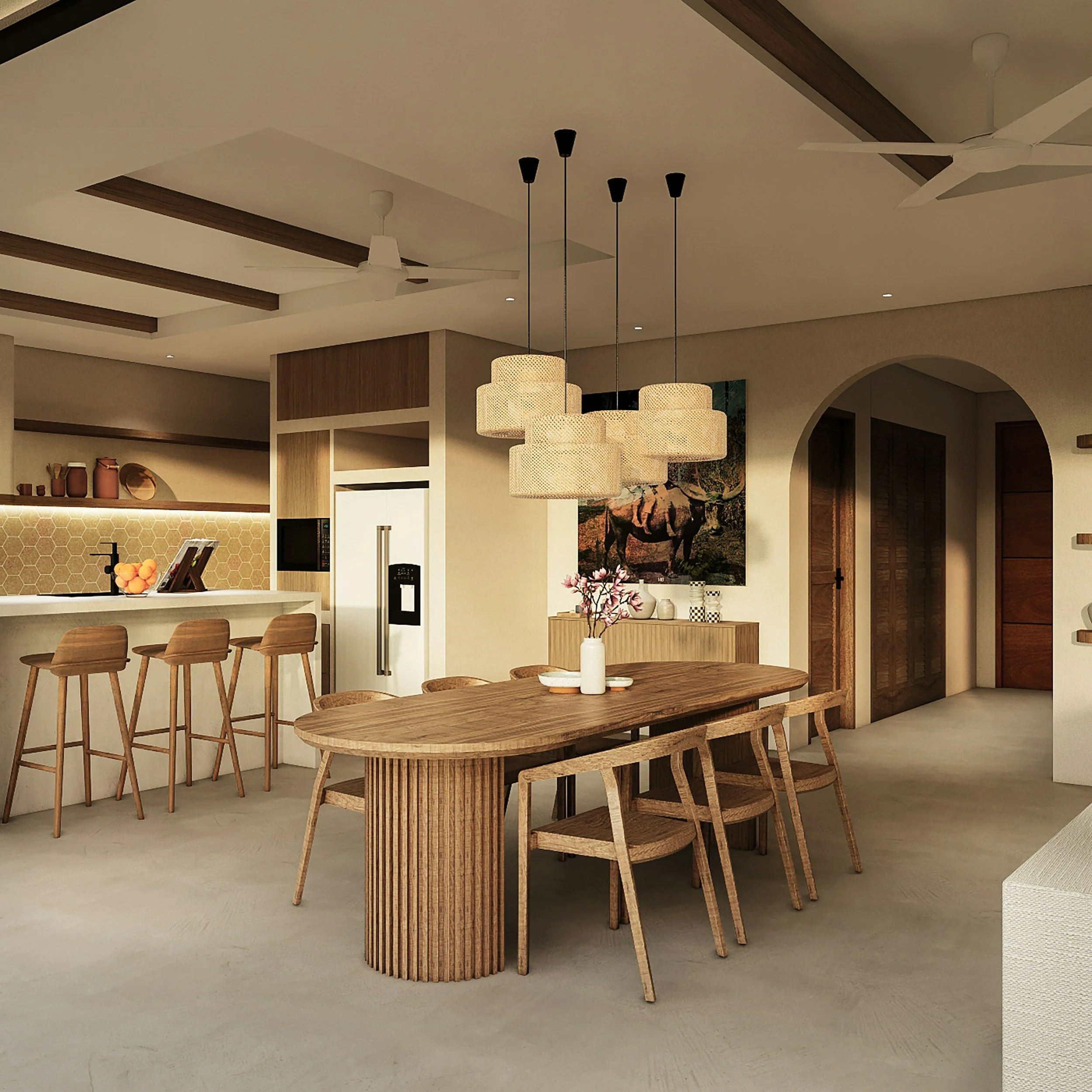
Pendant lights defining the dining zone in an open plan room
Colour, texture, and level
Run one colour palette through the whole space, then nudge the tones from area to area. Warmer, deeper shades where you relax; fresher, cleaner ones in the kitchen. Switching materials underfoot, say tile to wood-effect flooring, quietly tells you you've crossed into a new zone. And if you're renovating, even a small step up to a raised platform can turn a dining nook into a room all of its own.
Add broken-plan touches
Open plan doesn't have to be one big box. Half-height walls, glazed screens, slatted dividers, and tall plants all break things up gently while keeping the light and the connection.
They come into their own if you work from home. A glazed screen around a desk lets you tune out the kitchen while the light still pours through. We've used all sorts here, from reeded glass to a tall bookcase, depending on how much privacy someone's really after.
Don't forget about sound
Open plan rooms can be noisy. Hard floors, big windows, and not many soft surfaces send sound bouncing about, so the dishwasher ends up competing with the telly. Happily, the cure is mostly things you'd buy anyway: rugs, full-length curtains, a fabric sofa, plenty of cushions, and a few big pieces of art. Soften the room and each zone starts to feel like a proper room rather than a corner of a hall.
Protect the openness
The whole joy of open plan is the airiness, so be careful not to lose it. Keep at least one long view clear right across the room. Pick furniture with legs and low backs so the eye can travel. Leave plenty of room in the walkways. Good zoning should feel like the room gently guiding you, never like clutter getting in your way.
The result
Get it right and an open plan room gives you that lovely mix of togetherness and calm in the same footprint. Get it wrong and it feels like a showroom with no walls. The best part? Most of these tweaks cost little or nothing, they're easy to undo, and you can try them out in an afternoon.
Thinking about an open plan project? If you're working on a space anywhere in the West Midlands or across the UK and want it to feel just right rather than cavernous, we'd love to help. Book a consultation with Styling Spaces and we'll plan a layout around how you really live.